
On this page
INTERACTION DESIGN · 3 MIN READ
Show people there is more: continuation in multi-step flows
In 2023 I called it "teasing continuation": interface details that hint there is more, like a card peeking in from the edge of a carousel, to keep people engaged. I would frame it differently now. The goal is not engagement for its own sake. The goal is helping people finish what they came to do, and trust that the next step is worth taking.
Peek, don't hide
A row of cards that ends cleanly at the edge of the screen looks finished, so people stop. Let the next card show partially and the row explains itself without instructions. The experience carousel on this site does exactly that: the last visible card is cut at the edge, so it is obvious there is more to drag.
Progress tells people the end exists
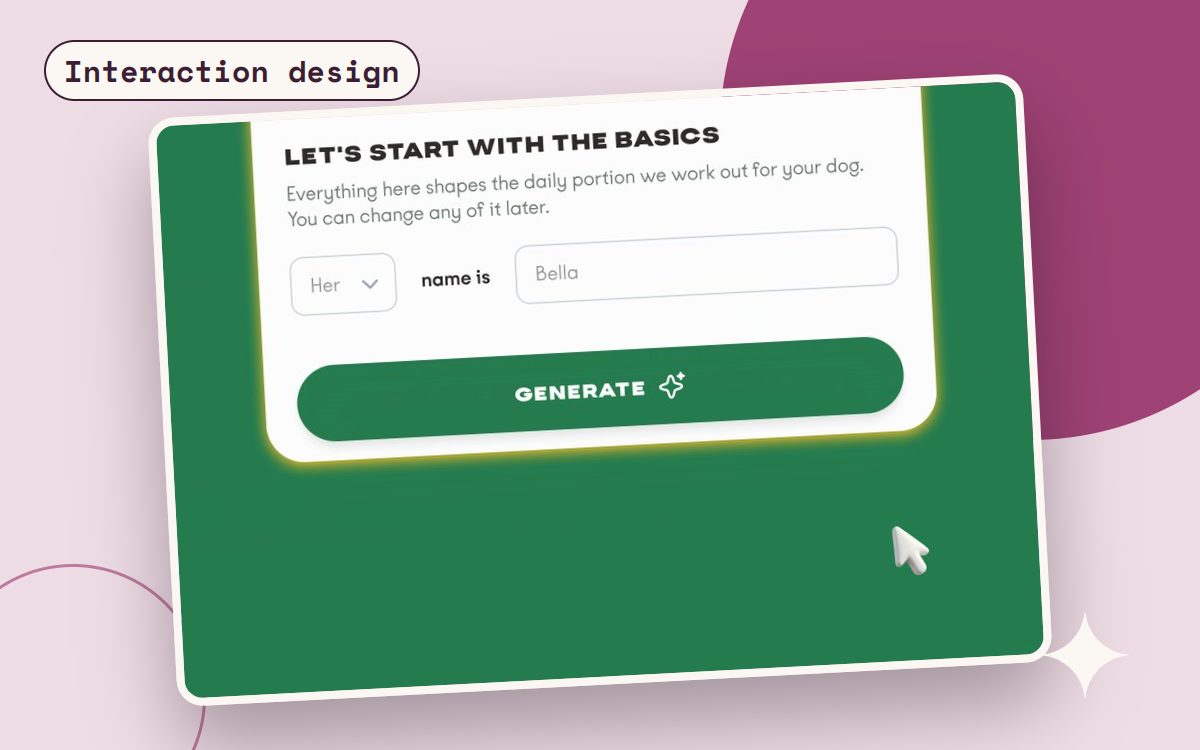
Long flows lose people when they cannot see how far they have come or how far is left. Bonza's onboarding quiz has five steps, and the step indicator ("Step 3 of 5") turns an open-ended form into a short, finite task.

Summaries keep context, and context keeps people
At NOTES Healthcare ERP, disputing a salary deduction was a multi-step flow, and people were getting lost in the middle. We added a step tracker, a running summary of what had already been entered, and the freedom to go back at any point without losing progress.
Drop-off in multi-step flows went from 47% to 11% after adding those step summaries.
Nothing in the flow became shorter. People simply always knew where they were, what they had done, and what came next.
Continuation after the "end"
Most products treat checkout as the finish line. Bonza treats it as the start: the meal plan keeps adjusting after purchase, using check-ins every two weeks rather than a weekly survey, so the relationship continues without becoming a chore. Every adjustment is proposed, and the owner confirms it.
Where continuation becomes manipulation
Endless feeds, fake progress bars and steps that hide costs until the last screen all use the same cues against the user. My rule: the hint must be honest. The next thing must exist, and it must be worth the person's time.
How to measure it
- Completion rate for the whole flow, and drop-off for each step.
- Where people go back, and whether they lose data when they do.
- Session recordings of the steps with the highest drop-off.